The way you work changes. The system stays.
One system that changes along with the way the company works — without hunting for a new register every time a new need comes up.
Sound familiar?
These are usually simple questions. Yet the answer is often in several places.
- Who has completed the mandatory training?
- Whose qualification is about to expire?
- How far along is the new colleague's entry process?
- Where does everyone stand in their performance?
- How much working time is left in the allowance?
- Has everyone received and accepted their documents?
- And which spreadsheet holds the current answer right now?
Parts of the same way of working
A colleague joins. Receives documents. Learns what they need to know. Works. Gets feedback. Grows.
-
Joins
Gets what they need to get: contract, equipment, access.
-
Receives documents
Accepts or signs them — and later you can still see when, and which version.
-
Learns
Gets what the role requires. No more, no less.
-
Works
Attendance, leave and the working-time allowance run in one place.
-
Gets feedback
Not once a year, from memory.
-
Grows
Moves on from what the feedback revealed.
These are not separate HR stories. They are parts of the same way of working — so the system does not have to start over at every step either.
What a manager sees
They do not need to know which module holds the data. They need to see where everything is in order — and where to step in.
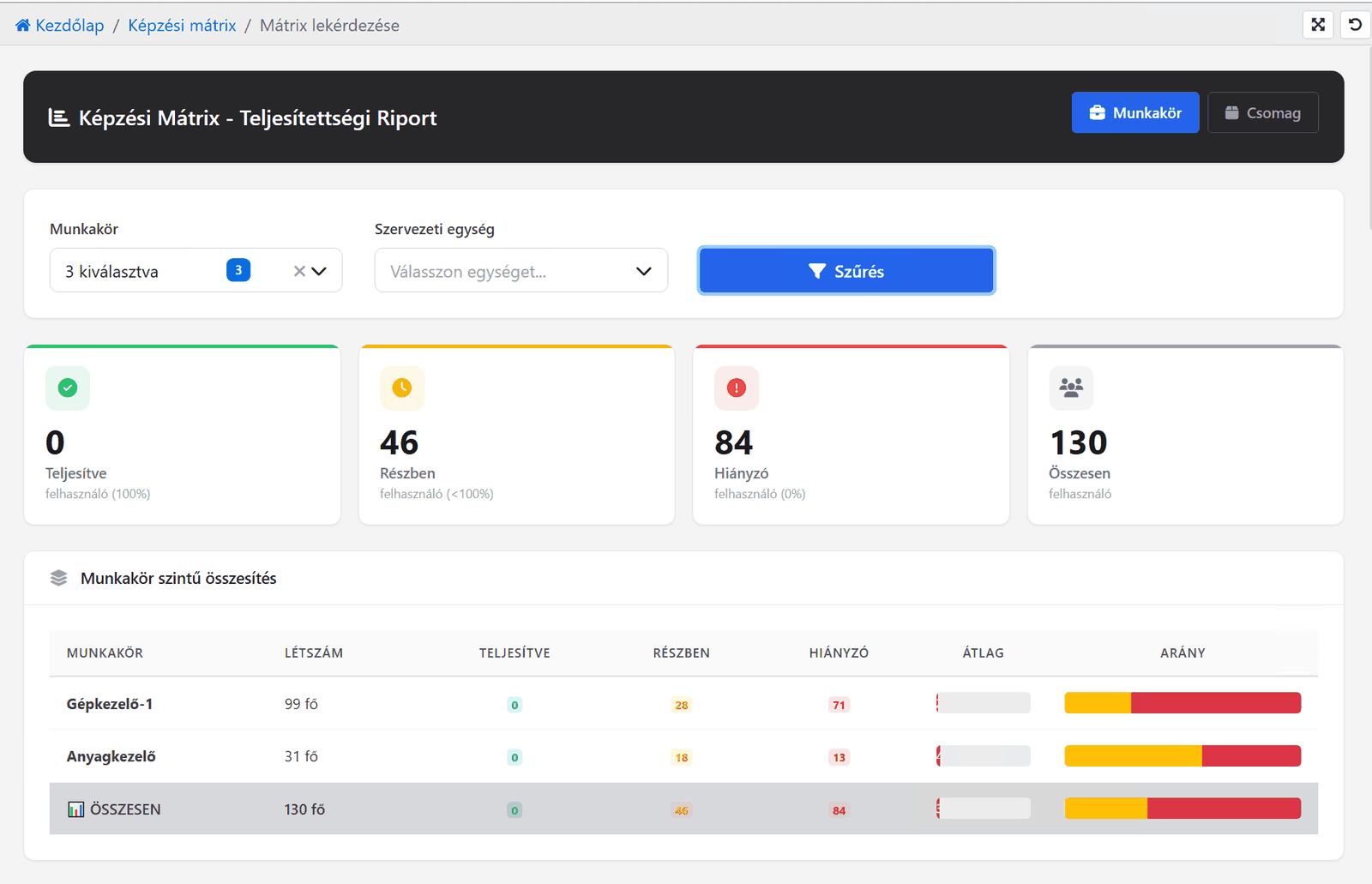
Simple when small. The same system when large.
Around 80 people
At 80 people, it may mean keeping three mandatory trainings a year, one performance review and leave in order.
In a larger organisation
In a larger organisation the same can mean several sites, roles, trainings, reviews and thousands of processes.
You do not need a new system just because the way you work gets more complex.
We have been refining this for 25 years
We are not trying to stretch one big HR system over everything. We build tools that fit together, for the same way of working.
Find what you need.
Five questions, two minutes — and you'll see which module would help the most.
Find itIf you'd also like to see how it all comes together in practice: Overview → Rather talk to us? Contact →